 Base by Base

Episodes on the brain, neurodevelopmental disorders, and the genetics of the nervous system.
88 episodes
-

Issue 462
Genetic evidence and cross-species functional characterization implicate CNN2 in age-related macular degeneration susceptibility
-

Issue 461
Ank3 loss in adult forebrain excitatory neurons disrupts behavior, neuronal activity, membrane proteome, and myelination
-

Issue 457
Exome analysis of 22,319 individuals links extremely rare copy-number variants and 22q11.21 dosage to Alzheimer risk
-

Issue 456
Beyond exons: Linking noncoding heritability and polygenicity across complex human traits and disorders
-

Issue 454
Treatment with efavirenz extends survival in a Creutzfeldt-Jakob disease model by regulating brain cholesterol metabolism
-

Issue 453
Treatment with efavirenz extends survival in a Creutzfeldt-Jakob disease model by regulating brain cholesterol metabolism
-

Issue 452
Prion protein lowering is a disease-modifying therapy across prion disease stages, strains and endpoints
-

Issue 451
Prion protein lowering is a disease-modifying therapy across prion disease stages, strains and endpoints
-

Issue 450
Antisense oligonucleotides extend survival of prion-infected mice
-

Issue 448
Antisense oligonucleotides extend survival of prion‑infected mice
-

Issue 447
Divalent siRNA for prion disease
-

Issue 446
Selective loss of primary cilia and neurotrophic signaling in G51D α- synuclein mice highlights a common pathway to Parkinson’s disease
-
Issue 442
Ca2+ regulation of PMCA2 calcium pump expression in hair cells of Tmc1 deafness mutants
-

Issue 429
Psychometric validation of the education and assessment of genetic literacy or the EAGL measure
-

Issue 412
Assessing the foundations of forensic identification evidence: A critical examination of proficiency test design and results
-

Issue 408
Tau protein as a regulator of mitochondrial function and dynamics
-

Issue 401
De novo variants in LDB1 are linked to distinct neurodevelopmental phenotypes determined by variant location and differing pathomechanisms
-

Issue 399
Genome-wide analysis implicates inner ear development in Ménière disease
-

Issue 392
Genome-wide association study of cocaine self-administration behavior in Heterogeneous Stock rats
-

Issue 381
Spatially tuneable multiomic sequencing using light-driven combinatorial barcoding of molecules in tissues
-

Issue 379
Long-read genome sequencing improves detection and functional interpretation of structural and repeat variants in autism
-

Issue 375
Biallelic loss-of-function variants in DSCAM cause a neurodevelopmental syndrome with nystagmus and retinal dysfunction
-

Issue 372
Longitudinal associations between cognitive ability and socioeconomic status are partially genetic in nature
-

Issue 371
Single-nucleus epigenomic dysregulation unmasks genetic risk-associated neurodegenerative glia states
-

Issue 368
PARP1 deficiency mitigates amyloid pathology, neurodegeneration, and cognitive decline in a familial Alzheimer’s disease model
-

Issue 361
Chiral inversion mutagenesis identifies geometrically constrained residues within self - associating low - complexity domains
-
Issue 358
Biallelic variants in CHCHD4 are associated with combined OXPHOS defect leading to mitochondrial disease
-

Issue 350
Rhesus macaques with an OPA1 mutation demonstrate features of autosomal dominant optic atrophy
-
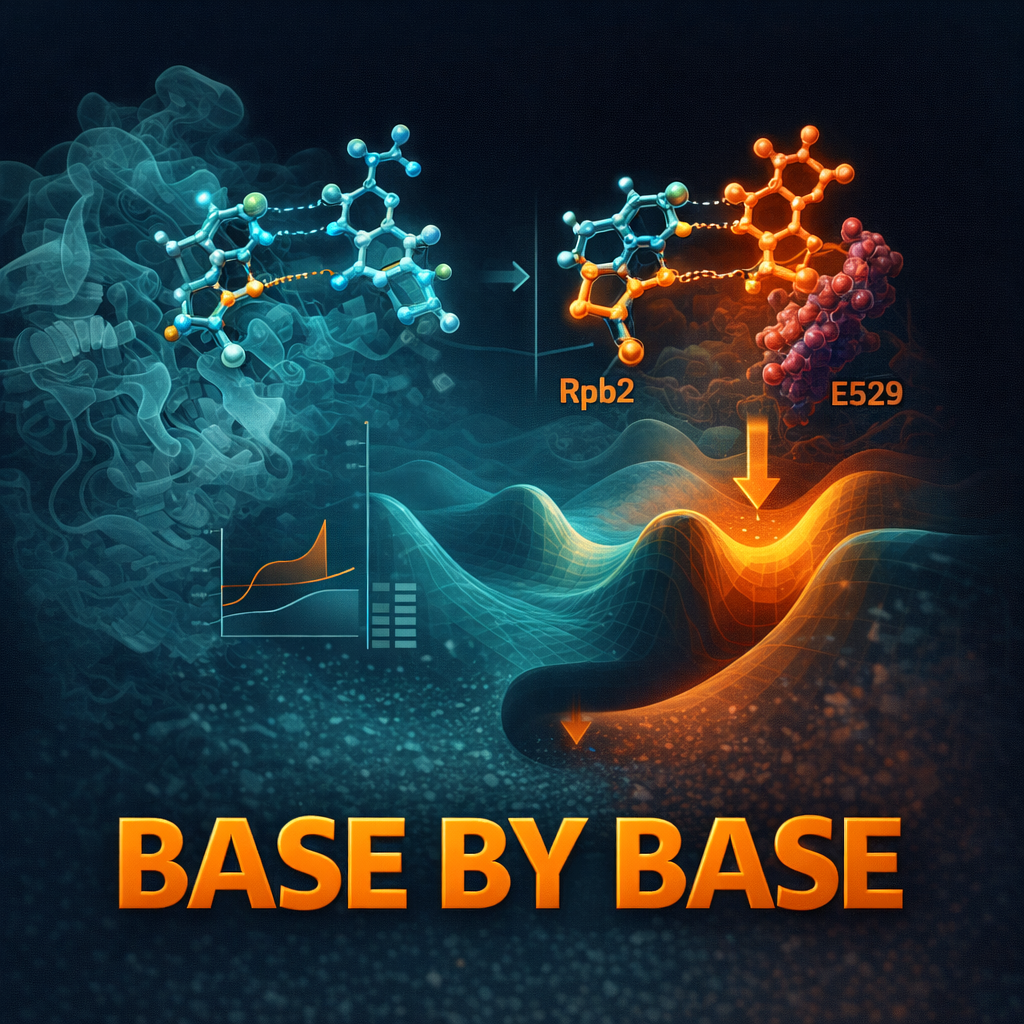
Issue 349
Structural basis of transcription -coupled RNA damage by incorporation of oxidized ribonucleotides
-

Issue 340
Alternative microexon splicing code for a four - amino acid peptide of PTPRD governs behavioral development
-

Issue 337
Neurodevelopmental copy-number variants increase risk of internalizing and cardiometabolic multimorbidity: Findings from the UK Biobank
-

Issue 331
Bi-allelic variants in NDUFA5 cause a mitochondriopathy with complex I deficiency
-
Issue 327
Bi-allelic ATG12 variants impair autophagy and cause a neurodevelopmental disorder
-

Issue 323
Meat Consumption and Cognitive Health by APOE Genotype
-

Issue 306
Loss-of-function variants in SAXO6, encoding a microtubule inner protein of photoreceptor cilia, cause a late-onset retinal dystrophy
-

Issue 300
Population-scale sequencing resolves determinants of persistent EBV DNA
-

Issue 299
Encephalopathy-linked UFM1 variants impede neuronal protein translation, development, and function
-

Issue 298
Bi-allelic variants in FSD1L cause retinitis pigmentosa with or without neurological involvement
-
Issue 297
Bi-allelic variants in FSD1L cause a neurodevelopmental disorder overlapping with L1 syndrome
-

Issue 283
Interaction of identity and beliefs with genetic literacy
-

Issue 282
A gene-specific variance-control approach corrects polygenicity-driven inflation observed in transcriptome-wide association studies
-

Issue 281
Molecular genotype-phenotype correlation in ACTB- and ACTG1-related non-muscle actinopathies
-

Issue 277
MDGA2 homozygous loss-of-function variants cause developmental and epileptic encephalopathy
-

Issue 275
Genomic analysis of 11,555 probands identifies 60 dominant congenital heart disease genes
-
Issue 272
The activity and expression of adenylosuccinate lyase were reduced during modern human evolution, affecting brain and behavior
-

Issue 271
Genetic associations with education have increased and are patterned by socioeconomic context: Evidence from 3 studies born 1946–1970
-
Issue 259
Oligomerisation of Ku from Mycobacterium tuberculosis promotes DNA synapsis
-

Issue 257
Investigating the neuronal role of the proteasomal ATPase subunit gene PSMC5 in neurodevelopmental proteasomopathies
-

Issue 246
Structural pharmacology of SV2A reveals an allosteric modulation mechanism in the major facilitator superfamily
-

Issue 240
CYFIP1 governs the development of cortical axons by modulating calcium availability
-

Issue 230
A de novo missense variant in MIDEAS results in increased deacetylase activity of the MiDAC HDAC complex causing a neurodevelopmental syndrome
-

Issue 229
Pharmacologic inhibition of PCBP2 biomolecular condensates relieves Alzheimer’s disease
-
Issue 219
Multi-omic analysis reveals lipid dysregulation associated with mitochondrial dysfunction in Parkinson’s disease brain
-

Issue 213
BRAIN-MAGNET: A functional genomics atlas for interpretation of non-coding variants
-

Issue 210
Tumour-reactive heterotypic CD8 T cell clusters from clinical samples
-

Issue 198
Mechanical confinement governs phenotypic plasticity in melanoma
-

Issue 195
-

Issue 189
-

Issue 188
-

Issue 182
-

Issue 155
A cardiovascular, craniofacial, and neurodevelopmental disorder caused by loss-of-function variants in the eIF3 complex component genes EIF3A and EIF3B
-

Issue 138
Social exposome and brain health outcomes of dementia across Latin America
-

Issue 128
LINE-1 retrotransposons mediate cis-acting transcriptional control in human pluripotent stem cells and regulate early brain development
-
Issue 126
Molecular and developmental deficits in Smith-Magenis syndrome human stem cell-derived cortical neural models
-

Issue 125
Tackling a disease on a global scale, the Global Parkinson’s Genetics Program, GP2: A new generation of opportunities
-

Issue 123
Dominant negative ATP5F1A variants disrupt oxidative phosphorylation causing neurological disorders
-

Issue 120
Rare variants in BMAL1 are associated with a neurodevelopmental syndrome
-

Issue 115
A transcriptomic, proteomic, and functional genetic atlas dissects neurofibromin function in the peripheral nervous system
-

Issue 106
Transcriptomic decoding of surface-based imaging phenotypes and its application to pharmacotranscriptomics
-

Issue 096
-

Issue 094
Intraindividual epigenetic heterogeneity underlying phenotypic subtypes of advanced prostate cancer
-

Issue 093
Highly pathogenic avian influenza H5N1 clade 2.3.4.4b genotype B3.13 is highly virulent for mice, rapidly causing acute pulmonary and neurologic disease
-

Issue 090
Variable and interactive effects of Sex, APOE ε4 and TREM2 on the deposition of tau in entorhinal and neocortical regions
-

Issue 089
Genome-wide association meta-analysis of human olfactory identification discovers sex-specific and sex-differential genetic variants
-

Issue 087
Circulating cell-free DNA methylation patterns indicate cellular sources of allograftinjury after liver transplant
-

Issue 083
Single-cell analysis of dup15q syndrome reveals developmental and postnatal molecular changes in autism
-

Issue 078
Interactions between TTYH2 and APOE facilitate endosomal lipid transfer
-

Issue 073
Assessing family history and approaches for identifying dementia patients with diagnostically significant genetic findings
-

Issue 072
Bi-allelic loss-of-function variants in POC5 cause a syndromic retinal, endocrine and neuromuscular ciliopathy
-
Issue 071
ELFN1 Deficiency: the mechanistic basis and phenotypic spectrum of a neurodevelopmental disorder with epilepsy
-

Issue 066
Mainstreaming of clinical genetic testing: A conceptual framework
-

Issue 057
Medicaid claims from 2008 to 2016 indicate low rates of genetic testing among children with intellectualdisability and autism spectrum disorder
-

Issue 056
The immunoproteasome disturbs neuronal metabolism and drives neurodegeneration in multiple sclerosis
-

Issue 048
Mainstreaming of clinical genetic testing: A conceptual framework
-

Issue 040
SLC7A11 is an unconventional H+ transporter in lysosomes
-

Issue 018
Bi-allelic UGGT1 variants cause a congenital disorder of glycosylation
-

Issue 015
The genetic changes that shaped Neandertals, Denisovans, and modern humans
-

Issue 006
Bi-allelic pathogenic variants in TRMT1 disrupt tRNA modification and induce a neurodevelopmental disorder